
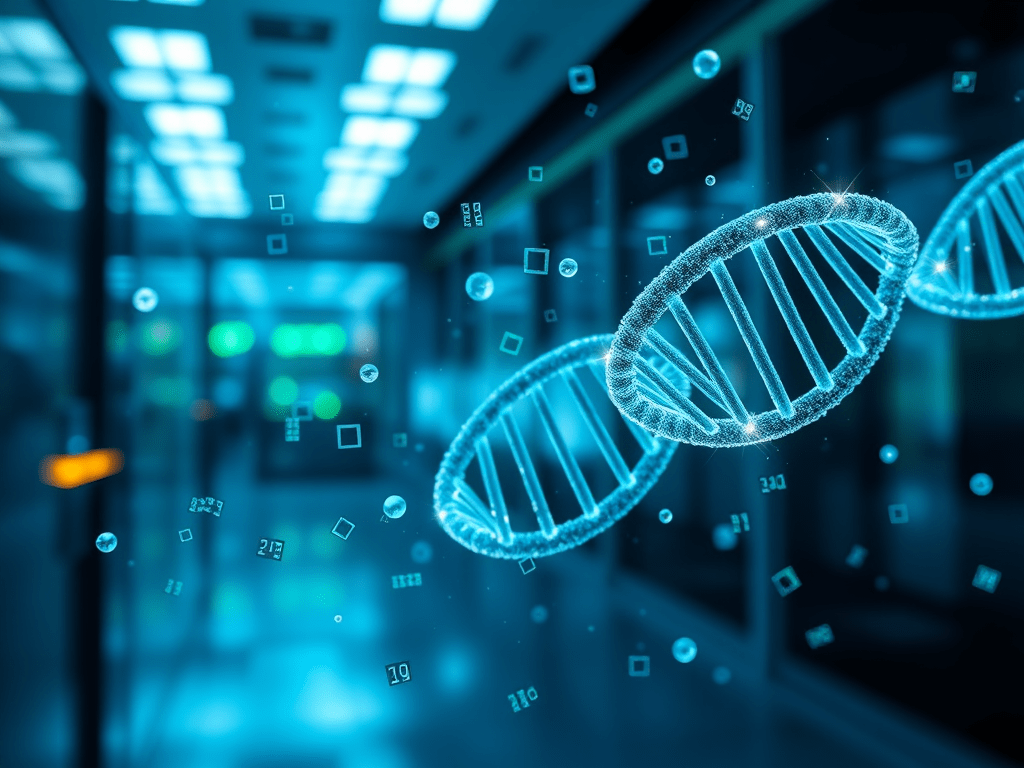
Learn how quantum and DNA storage could change everything about saving data. Discover why scientists are storing information in DNA and quantum particles, and whether these mind-blowing technologies will replace your phone’s storage.
Table of Contents
- Why Do We Need New Storage?
- What’s Quantum Storage?
- What’s DNA Storage?
- Why These Technologies Are Cool
- What’s Holding Them Back?
- Who’s Actually Using This Stuff?
- When Can I Get This?
- How They Stack Up
- What Experts Think
- Should Your School/Business Care?
- What’s Coming Next
- The Bottom Line
- Quick Facts Checklist
Why Do We Need New Storage?
Think about how much stuff is on your phone right now. Photos, videos, apps, messages, music. Now imagine that times a billion. That’s basically how much data the world creates every single day.
Here’s a wild fact: every day, people create about 2.5 quintillion bytes of data. That’s a 25 with 17 zeros after it. By 2026, we’ll have 181 zettabytes of data floating around (that’s even MORE zeros). Our current storage methods like hard drives and SSDs are struggling to keep up.
That’s where quantum storage and DNA storage come in. Scientists are literally trying to store your data in particles and in actual DNA (yes, like the stuff inside your cells). Sounds like science fiction, right? Let’s break it down.
What’s Quantum Storage? {#quantum-storage}
Remember learning about atoms in science class? Quantum storage uses tiny particles like photons (light particles) or electrons to store information. Instead of regular computer storage that uses 1s and 0s, quantum storage uses something called “qubits.”
How Does It Work?
Here’s the mind-blowing part: regular computer bits can only be a 1 OR a 0 at any moment. But qubits can be both at the same time, thanks to something called “superposition.” It’s like if you flipped a coin and it landed on both heads AND tails simultaneously. Weird, right? That’s quantum physics for you.
Scientists store these qubits in super-cooled environments using things like quantum dots, trapped atoms, or even special crystals. They’re basically catching particles and making them store information.
Why It’s Awesome
It’s ridiculously fast: Quantum storage could access data millions of times faster than what your phone can do. Imagine opening any app or file instantly, no loading screens ever.
Basically unhackable: Because of how quantum physics works, if someone tries to steal your data, the quantum state changes and you know immediately. It’s like if your locker automatically locked differently every time someone tried to break in.
Does multiple things at once: Thanks to that superposition thing, quantum storage can handle tons of tasks simultaneously instead of one at a time.
What’s DNA Storage? {#dna-storage}
This one’s even wilder. Scientists are literally storing computer data in actual DNA strands, just like the DNA in your body that determines your eye color and height.
How Does It Work?
DNA has four building blocks called bases: A (adenine), T (thymine), G (guanine), and C (cytosine). Scientists convert computer data (all those 1s and 0s) into sequences of A, T, G, and C. Then they actually create real DNA with those sequences in a lab.
When they need the data back, they use DNA sequencing machines (the same ones doctors use to read your genetic code) to read the DNA and convert it back to digital data. Companies like Microsoft and researchers at major universities have already done this successfully.
Why It’s Awesome
Insane storage capacity: One gram of DNA (about the weight of a paper clip) could store 215 petabytes of data. That’s like 10 million hours of HD video or basically every movie ever made, fitting in something smaller than a sugar cube.
Lasts forever: DNA can stay stable for thousands of years. Your phone’s storage might last 5-10 years if you’re lucky. DNA storage could preserve your data for literally millennia.
Zero energy needed: Once you’ve written data to DNA, it just sits there. No battery, no power, no charging. Meanwhile, data centers use as much electricity as entire cities just to keep your cloud storage running.
Why These Technologies Are Cool {#benefits}
Takes Up Almost No Space
Data centers are HUGE. Like, multiple football fields huge. They use tons of electricity and land. With DNA storage, you could fit all the data from the world’s biggest data centers into something the size of a backpack. Maybe even a shoebox.
Way Better for the Environment
Right now, all those data centers storing your TikToks and Snapchat memories use about 2% of all the world’s electricity. That’s a LOT of energy and creates tons of carbon emissions (bad for climate change). DNA storage needs zero ongoing power, and quantum storage is way more efficient than traditional computers.
Your Data Could Outlive Your Great-Great-Grandchildren
Think about old floppy disks or CDs. They die after a few decades, and you need to constantly copy your data to new storage. DNA could keep your family photos, videos, and memories safe for thousands of years without doing anything.
Could Get Cheaper Over Time
Right now, this stuff is EXPENSIVE. But so were computers when they first came out (a computer used to cost as much as a house). The cost of working with DNA has been dropping fast, kind of like how phones get cheaper and better every year.
What’s Holding Them Back? {#challenges}
It’s Still Really Slow (For DNA)
Writing data to DNA can take hours or even days. Reading it back takes hours too. So if you need to access something quickly, DNA storage is useless right now. It’s more for stuff you want to keep forever but don’t need to look at often, like backup files or archives.
Lots of Errors
Both technologies have problems with mistakes. When you create DNA, errors can happen about once in every 100-1,000 letters. Scientists need complex error-correction codes (like spell-check but way more complicated) to fix these mistakes.
Quantum storage has a different problem called “decoherence.” Basically, quantum states are super fragile and fall apart easily, like a house of cards collapsing if you breathe on it.
It Costs a TON Right Now
Writing just one megabyte (that’s like one photo from your phone) to DNA can cost thousands of dollars. Quantum storage requires super expensive equipment and facilities. This isn’t something you can buy at Best Buy anytime soon.
Hard to Scale Up
Making enough DNA storage or quantum storage for everyone would require building entirely new types of factories and facilities. The technology works in labs, but mass-producing it is a whole different challenge.
Who’s Actually Using This Stuff? {#applications}
Quantum Storage Users
Research labs: Places like CERN (where they study particles and try to understand the universe) use quantum storage for their experiments.
Banks: Some financial companies are testing quantum storage for super-secure transaction records.
Government agencies: Military and intelligence agencies want quantum storage for classified information because it’s basically unhackable.
Tech companies: Google, IBM, and Microsoft are all building quantum computers that need quantum storage to work.
DNA Storage Users
Movie studios: Some studios are testing DNA storage to preserve old films forever.
Hospitals: Medical records need to be kept for decades. DNA storage could keep them safe without taking up entire warehouses.
Museums: Imagine preserving ancient texts, artwork photos, and historical documents for thousands of years without them degrading.
NASA: Space agencies want DNA storage for spacecraft because it weighs almost nothing and never needs power.
Research institutions: CERN and other science organizations are storing massive datasets in DNA.
When Can I Get This? {#timeline}
Next Few Years (2025-2027)
You won’t be buying this at a store. Some specialized companies might offer DNA storage services for archives, but it’ll be expensive and only for organizations. Quantum storage stays in research labs.
5-7 Years (2028-2032)
DNA storage might start becoming affordable for certain purposes, like long-term backups that you rarely access. More companies will offer it as a service. Quantum storage will support quantum computers in specific locations, but still not for everyday use.
10-15 Years (2033-2040)
DNA storage could become common for archives and backups. Companies might offer it as a cloud storage option for stuff you want to keep forever but never need to access quickly. Quantum storage will expand for quantum computing networks.
Reality check: Your phone, laptop, and gaming console will still use regular storage (SSDs and hard drives) because they’re fast and work great for everyday use. These new technologies are for specific purposes, not replacing everything.
How They Stack Up {#comparison}
Storage Amount
DNA Storage: 215 petabytes per gram (theoretical) – basically infinite compared to what we have now
Your Phone/Computer SSD: Maybe 1-2 terabytes max
External Hard Drive: 2-5 terabytes typically
Quantum Storage: Varies, mainly for special quantum information
Speed
Your Phone/Computer SSD: Opens apps and files in milliseconds – super fast
Hard Drive: A bit slower, still pretty quick
Quantum Storage: Basically instant for quantum stuff
DNA Storage: Hours or days to save or load – super slow
How Long It Lasts
DNA Storage: Thousands of years potentially
SSD: 5-10 years
Hard Drive: 3-5 years with heavy use
Quantum Storage: Microseconds to seconds (the quantum state collapses quickly)
Cost Right Now
DNA Storage: $1,000 to $10,000 PER MEGABYTE (insanely expensive)
SSD: About $0.10 per gigabyte (1,000 megabytes)
Hard Drive: About $0.03 per gigabyte
Quantum Storage: Too expensive to even calculate for consumer use
What Experts Think {#expert-opinions}
Scientists who work on this stuff are excited but realistic. Dr. George Church from Harvard (a famous genetics professor) thinks DNA storage could become practical for archives within 5-10 years.
Quantum experts say quantum storage is amazing for quantum computers, but using it for regular data storage (like your photos and files) is still far off in the future.
Most experts agree these won’t replace your phone’s storage or your laptop’s hard drive. Instead, they’ll be used for specific purposes where their unique advantages matter, like keeping backups forever or running quantum computers.
Should Your School/Business Care?
Figure Out What You Actually Need
Most people and organizations don’t need this yet. Regular storage works fine for 99% of uses. These new technologies make sense if you have massive amounts of data to archive forever, like a school district keeping records or a hospital storing patient files.
Start Small If You’re Curious
Some companies now offer DNA storage services. If your school or organization wants to experiment, start with non-critical data as a test. Don’t put important stuff in experimental technology yet.
Stay Informed
Technology changes fast. What seems impossible today might be normal in a few years. Keep learning about these technologies so you’re ready when they become practical.
Watch the Prices
DNA synthesis and sequencing costs are dropping rapidly. Set up Google alerts or follow tech news to track when prices hit levels that make sense for your needs.
What’s Coming Next {#future}
The future of data storage will probably be a mix of different technologies, each doing what it does best:
Fast storage (SSDs): For your phone, computer, games – anything you use daily
Regular hard drives: For backing up large files at home
Cloud storage: For accessing files from anywhere
DNA storage: For archiving stuff you want to keep forever but rarely access
Quantum storage: For quantum computers and super-secure communications
Think of it like transportation. We didn’t stop using cars when planes were invented. We use each for different purposes. Same thing here.
The coolest part? DNA storage could let humanity preserve our knowledge and culture for thousands of years. Imagine if the ancient Egyptians had DNA storage – we’d have perfect copies of all their books and knowledge, not just fragments.
The Bottom Line
So are quantum and DNA storage “the next big thing”? Yes and no.
YES because:
- They solve real problems with current storage
- The technology genuinely works (in labs)
- Major companies are investing billions of dollars
- They’ll enable things we can’t do now
NO because:
- They won’t replace your phone or computer storage
- They’re still really expensive
- They’re slow (especially DNA)
- It’ll take years or decades to become common
The truth is somewhere in between. These technologies ARE revolutionary for specific uses. DNA storage will probably become the go-to choice for long-term archives. Quantum storage will power the quantum computers of the future.
But when you buy your next phone or laptop, it’ll still have regular SSD storage. That’s not going away anytime soon.
The future is weird and exciting, and it’s coming faster than we think.
Quick Facts Checklist {#checklist}
Quantum Storage Basics
- ☐ Uses tiny particles to store information
- ☐ Works with qubits instead of regular bits
- ☐ Super fast and ultra-secure
- ☐ Needs extremely cold temperatures
- ☐ Mainly for quantum computers, not your phone
DNA Storage Basics
- ☐ Stores data in actual DNA strands
- ☐ One gram holds 215 petabytes (insane capacity)
- ☐ Lasts thousands of years
- ☐ Really slow to write and read
- ☐ Still super expensive but getting cheaper
Key Differences
- ☐ DNA = massive storage, slow access, lasts forever
- ☐ Quantum = super fast, ultra-secure, for special uses
- ☐ Regular storage = fast, affordable, good for daily use
- ☐ Each type is best for different purposes
Timeline Expectations
- ☐ Not available for consumers yet
- ☐ DNA storage might be practical in 5-10 years for archives
- ☐ Won’t replace phone/computer storage anytime soon
- ☐ Quantum storage mainly for quantum computing
Why It Matters to You
- ☐ Shows how fast technology is advancing
- ☐ Could preserve human knowledge for millennia
- ☐ Better for environment than current data centers
- ☐ Part of your future, just not your immediate future
- ☐ Cool to understand cutting-edge science
Fun Facts to Remember
- ☐ All Netflix movies could fit in a sugar cube of DNA
- ☐ Quantum particles can be in two states at once
- ☐ Data centers use 2% of world’s electricity
- ☐ DNA has stored genetic info for millions of years
- ☐ Your selfies could outlast the pyramids with DNA storage
 CreativeSpace - Think Bold. Grow Bold.